Sports Mimetics performing the sports without talking or saying a word. Its purely action. People may recognize what other people doing or are able to do in sports thru action. Also, an Imitation of sports action should be considered as mimetic sports.
Thank you for reading and commenting...
Here's our Examination Schedule for Across all levels
Thank you for reading and commenting...
Here's our Schedule for Synchronous and Asynchronous:
Class Schedule:
Thank you for reading and commenting...
Guidelines on the Request of Parents for Conference with
Teachers:
.1. Parents
shall inform the adviser through private message or any
communication process regarding their
request/concern.
2. The
adviser will send the request/concern to
the subject coordinator who
will then inform the subject teacher and
agree on the schedule of the
conference.
3. The
subject coordinator will report all scheduled conferences of the teachers
3to the principal.
4.
Consultations will follow the same level of discussions:
1st -
Subject Teacher with the Parent
2nd -
Subject Teacher, Parent and with the Subject Coordinator
3rd -
Subject Teacher, Parent, Subject Coordinator and with the Principal
Please be
guided accordingly.
Thank you for reading and commenting...
What To Do After A Typhoon
- Monitor to your radio, television or visit Weather Philippines for storm advisories on the progress of the typhoon.
- Check your house for damage and make necessary repairs at once. Avoid scattered debris especially tin and lumber as there may be rusty nails protruding.
- Wear proper safety gear and equipment when working in hazardous areas.
- If your house was damaged, make sure that it is already safe and stable when you enter.
- Have a knowledgeable person inspect electrical connections before using electrical appliances.
- Watch out for live wires or outlet immersed in water.
- Report damaged electrical cables and fallen electric posts to the authorities.
- Beware of dangerous animals such as snakes that may have entered your house.
- Boil water before drinking it to avoid diseases.
- Avoid contaminated food resulting from the lack of electricity and refrigeration.
- Do not let water accumulate in tires, cans or pots to avoid creating a favorable condition for mosquito breeding that can cause dengue.
Source:
Typhoon Weather Updates
Thank you for reading and commenting...
What To Do During A Typhoon
- Stay inside the house and keep calm. Postpone any travel.
- Monitor to your local radio, television or visit Weather Philippines for storm advisories on the progress of the typhoon.
- In case of flooding, turn off the main sources of electricity to prevent electrical accidents.
- Avoid wading through flooded areas to avoid water-transmitted diseases.
- Do not operate any electrical equipment during a flood.
- Do not use gas or electrical appliances that have been flooded.
- Keep an eye on lighted candles or gas lamps.
- Heed the advice of the local authorities if they ask you to evacuate your area. If there is a need to move to an evacuation center, follow these reminders:
- Evacuate calmly.
- Close the windows and turn off the main power switch.
- Put important appliances and belongings in a high ground.
- Avoid the way leading to or along the river.
Source:
Typhoon Weather Updates
Thank you for reading and commenting...
What To Do Before A Typhoon
- Inspect your house if necessary repair/fixing is needed. (eg. Roof, doors, windows, ceilings)
- Before typhoon strikes, you must clean up your house’s drainage system so it won’t get clogged up.
- Store an adequate supply of food and water that would last for a few days. Canned goods are ideal especially if cooking is not possible.
- Put everything in your house in an elevated position especially items that generate electricity so that water won’t penetrate into them in case floodwater rushes inside your house.
- Harvest crops that can be yielded immediately.
- For fishing folk, place boats in a safe area.
- If you are living in a lowland, hazard prone and/or risked areas, the ideal resort is to evacuate as early as possible.
- Always keep flashlights, candles, and batteries and first-aid supplies available.
- It is important as well to have an available transistor radio (battery – powered incase power supply will be unavailable) so you can be updated about the typhoon and its current location.
- Frequently listen to your local radio, television or visit Weather Philippines for storm advisories on the progress of the typhoon.
Source:
Tyhoon Weather Updates
Thank you for reading and commenting...
I TARGET GRADE LEVEL: Grade 7
II MODULES 1-2: Vocal Music: Nationalistic Songs and Love Songs
The Two Classifications of Vocal Music composed by Filipinos – the Nationalistic Songs and Love Songs.
Nationalistic compositions:
- Marangal na Dalit ng Katagalugan by Julio Nakpil
- Lupang Hinirang by Julian Felipe
Love Songs compositions:
- Kundiman Nasaan Ka Irog by Nicanor Abelardo
- Gaano Ko Ikaw Kamahal by Ernani Cuenco
These songs express the beliefs of a nation about patriotism and love and how a nation places a value on artists’ creations. . A group song and dance performance on these four songs culminates the educational experience and musical elements.
The two representative nationalistic songs,
Marangal na Dalit ng Katagalugan (Nakpil) and
Lupang Hinirang (Felipe), played very important roles in our history, being iconic representations of our nation’s love of freedom, at this point in time, from the Spanish regime.
On the other hand,
Nasaan Ka Irog (Abelardo)
Gaano Ko Ikaw Kamahal (Cuenco) are our artists’ creative expressions of love which are valued in our Philippine culture and heritage.
Thank you for reading and commenting...
MUSIC
Rubrics for Group Performance:
- Basic –Unfocused tone, erratic rhythm, unstable pitch, inconsistent phrasing, dynamics and shows minimal awareness of style and context; movement irrelevant to the lyrics and/or elements of music present in the song.
- Developing: Focused tone but inconsistent in extreme ranges, some repeated errors in rhythm and pitch, consistent phrasing, discernible dynamics, some nuances in style as suggested by the score/teacher.; some movements inconsistent with the lyrics and/or elements of music present in the song.
- Approaching Proficiency: Focused and clear tone in normal ranges, accurate rhythm and secure pitch with isolated errors, accurate and consistent phrasing, accurate dynamics, with some nuances in style as suggested by the score/teacher; some movements inconsistent with the lyrics and/or elements of music present in the song.
- Proficient : Focused, clear tone all throughout, accurate rhythm and secure pitch, consistent and sensitive phrasing and obvious dynamics, with creative nuances in response to the style and music score; movements relevant to the lyrics and/or elements of music present in the song Thank you for reading and commenting...

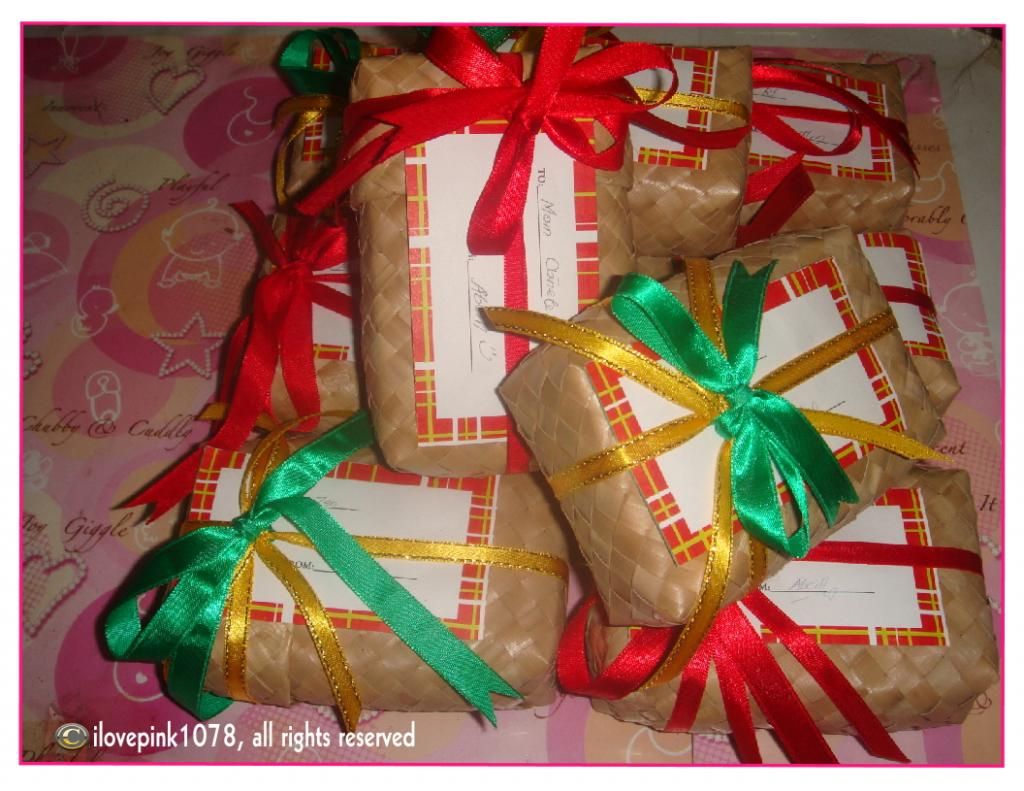
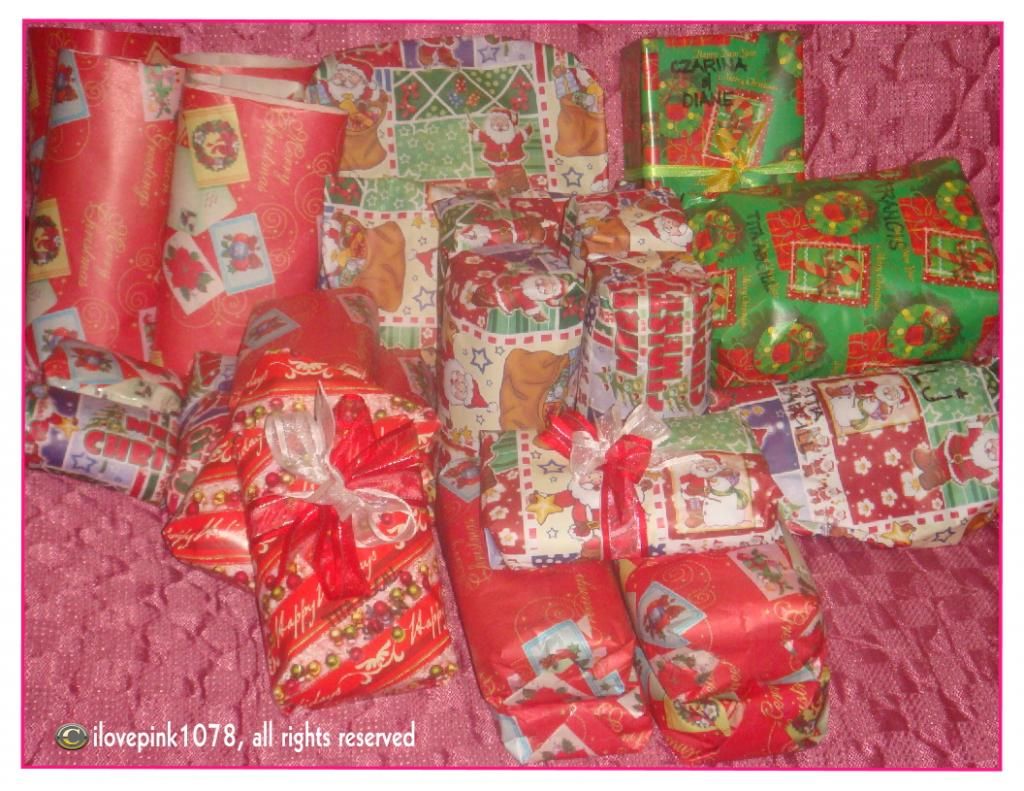
Gift Giving Guide :
• Be sure you have enough money for everyone on your gift list by diving up your gift
budget and deciding on a spending limit for each person.
• Is someone in your barkada or are you low on cash this year? Instead of giving gifts to each person, organize an exchanged gift game so you only have to give a gift to one person and everyone gets a gift. Agree on a maximum spending limit so no one feels bad about giving or getting.
• No clue what to get someone? Take time to observe them and take down notes. What color she/he likes? Is she/he a member of any club? What is her/his Style? She will/He will appreciate that you made an effort to choose a personal gift just for her/him.
Note:
Don’t forget
material gifts aren’t the most important thing about
Christmas. Don’t have money to spend on a gift for someone you care about? Think of other ways you can make them feel special and show them how much they mean to you.
• Greeting them
• Visiting Them
• Praying for them
• Helping them
Thank you for reading and commenting...
Six Facets of Understanding
Transfer manifests itself in a variety of ways. More specifically, we propose that understanding as transfer is revealed through six facets of understanding, summarized here. Individuals who understand and can transfer their learning:
- Can explain: make connections, draw inferences, express them in their own words with support or justifi cation; use apt analogies; teach others.
- Can interpret: make sense of, provide a revealing historical or personal dimension to ideas, data, and events; make it personal or accessible through images, anecdotes, analogies, and stories; turn data into information; provide a compelling and coherent theory.
- Can apply and adjust: use what they have learned in varied and unique situations; go beyond the context in which they learned to new units, courses, and situations beyond the school.
- Have perspective: see the big picture; are aware of, and consider, various points of view; take a critical or disinterested stance; recognize and avoid bias in how positions are stated.
- Show empathy: perceive sensitively; can “walk in another’s shoes”; fi nd potential value in what others might fi nd odd, alien, or implausible.
- Have self-knowledge: show metacognitive awareness; refl ect on the meaning of new learning and experiences; recognize the prejudices, projections, and habits of mind that both shape and impede their own understanding; are aware of what they do not understand in this context.
Thank you for reading and commenting...
Common characteristics for effective learning design:
1. Expectations. The best learning designs
- Provide clear learning goals and transparent expectations.
- Cast learning goals in terms of specifi c and meaningful performance
- Frame the work around genuine issues/questions/problems
- Show models or exemplars of expected performance and thinking.
2.
Instruction. In the best learning designs
- The teacher serves as a facilitator/coach to support and guide learner inquiry.
- Targeted instruction and relevant resources are provided to equip students for expected performance.
- The textbook serves as one resource among many (i.e., text is resource, not syllabus).
- The teacher uncovers important ideas and processes by exploring essential questions and genuine applications of knowledge and skills.
3.
Learning Activities. In the best learning designs
- Individual differences (e.g., learning styles, skill levels, interests) are accommodated through a variety of activities and methods.
- There is variety in work and methods; and students have some choice (e.g., opportunities for both group and individual work).
- Learning is active/experiential to help students make sense of complex content.
- Cycles of model-try-feedback-refi ne anchor the learning.
4.
Assessment. In the best learning designs
- There is no mystery as to performance goals or standards.
- Diagnostic assessments check for prior knowledge, skill level, and misconceptions.Students demonstrate their understanding through real-world applications (i.e., genuine use of knowledge and skills, tangible product, target audience).
- Assessment methods are matched to achievement targets.
- Ongoing, timely, and descriptive feedback is provided.
- Learners have opportunities for trial and error, refl ection, and revision.
- Self-assessment is expected and encouraged.
5.
Sequence and Coherence. The best learning designs.
- Start with a hook and immerse the learner in a genuine problem/issue/ challenge.
- Move back and forth from whole to part, with increasing complexity.
- Scaffold learning in doable increments.
- Teach as needed; don’t overteach all of the “basics” fi rst.
- Revisit ideas—have learners rethink and revise earlier ideas or work.
- Are flexible (e.g., respond to student needs; are revised to achieve goals.
Thank you for reading and commenting...
Standards-based Assessment: (What it is?)
- Indicates what students know and are able to do;
- Measures a student’s progress toward the attainment of a standard;
- Indicates if the student has mastered the standard;
- Is on going;
- Clearly communicates expectations ahead of time;
- Is authentic to the learning experiences of the students, based on complex tasks, as opposed to rote memory;
- Occurs when appropriate, not just on scheduled days. Often uses tasks that reveal common misunderstandings so teachers can see whether students have truly learned the material;
- Grades are based on the results of multiple experiences over time.
Thank you for reading and commenting...
Interpretive Test
- The teacher carefully selects or design an appropriate material and generates test items based on the material.
- Essays, poems, paragraphs, diagrams, frameworks, tables, graphs, labels, mini-stories, cartoons, news articles, features, etc.
Thank you for reading and commenting...
Graduates of K to 12 will be holistically developed Filipinos with 21st Century Skills:
- Acquire mastery of basic competencies;
- Be emotionally mature;
- Be socially aware, pro-active, involved in public and civic affairs;
- Be adequately prepared for the world of work or entrepreneurship or higher education;
- Be legally empliyable with pontential for better earnings;
- Be globally competitive.
Thank you for reading and commenting...
It has been fifteen years have not heard from one another since our Junior High School graduation. Most of us finished college, landed a job and others settle down. For a couple years, it is hard to keep in touch and communicate with them. Conversely, with the help of the technology and face book we easily communicate one another. Just, last month we plan to organize a grand reunion for our batch, to know and reconnect our fellow classmates. We agreed to form committees since the event is quite big. So, it will become lighter.
We keep on declining to whom the program takes charge. For an hour of discussion, finally and unfortunately, I was assigned to the weighty and tough yet challenging task a committee on program, token, and souvenirs. As the committee on souvenirs, I am looking for good
giveaway so that our reunion will be more memorable. I tried to search and consolidate ideas from our chairperson. He suggested to have a
personalized t-shirt with logo and
customized pen. This is a very good idea for giveaway.
In the meanwhile, I am looking and searching a minimal cost for our giveaway souvenirs. However, I have found a site that has
promotional items. The products are very affordable that fits to the budget and high quality product. In fact, it has volumes of design, styles that help the customization. It is easy to order and hassle free. I am very thankful to branders, for saving my time and effort. It lightens my task.
Thank you for reading and commenting.
The Movie Three (3) Idiots:
The
Synopsis:
Rancho is from a rich family. While, Farhan and Raju are average students from modest backgrounds. With his different approach, Rancho incurs the wrath of dean of college, Professor Viru Sahastrabudhhe (Virus) (Boman Irani). The experience has changed Farhan and Raju, and they adopt Rancho's outlook. After the baby is apparently stillborn, Rancho resuscitates it. Pia and the fake Rancho rekindle their love, while Chatur mocks and abuses Rancho the schoolteacher before walking away.
Guide Questions:
- What is the plot of the story?
- Who are the characters in the movie three (3) idiots?
- Which of the three male characters do you like most and Why?
- Which scene did you enjoy the most? Which scene touched you the most?
- What lesson did you learn from the story?
Thank you for reading and commenting...